
November is full of things to read about: Veterans Day, turkeys, cranberries, families and being thankful are some of my favorites. The November close reading passages for first grade use those topics for eight weeks of close reading lessons. Here’s a look at what’s inside and how to use it.
What’s in the November Set
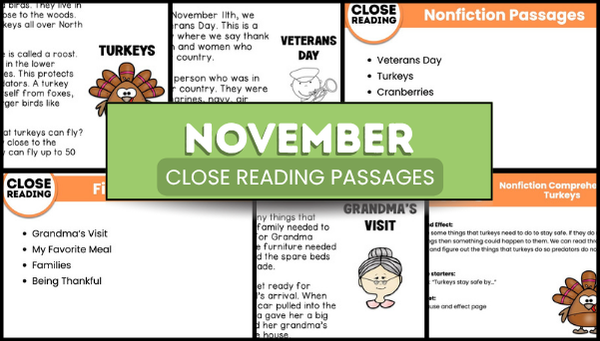
You get 8 passages: 4 nonfiction and 4 fiction.
Nonfiction:
- Veterans Day
- Turkeys
- Cranberries
- The First Thanksgiving
Fiction:
- Grandma’s Visit
- My Favorite Meal
- Families
- Being Thankful
Every passage comes with a 5-day lesson plan, so the set covers 40 days of close reading lessons. Each one is ready to print or assign in Google Slides.

The Tools That Come With It
Close reading is new to a lot of first graders, so the set includes the tools to teach it:
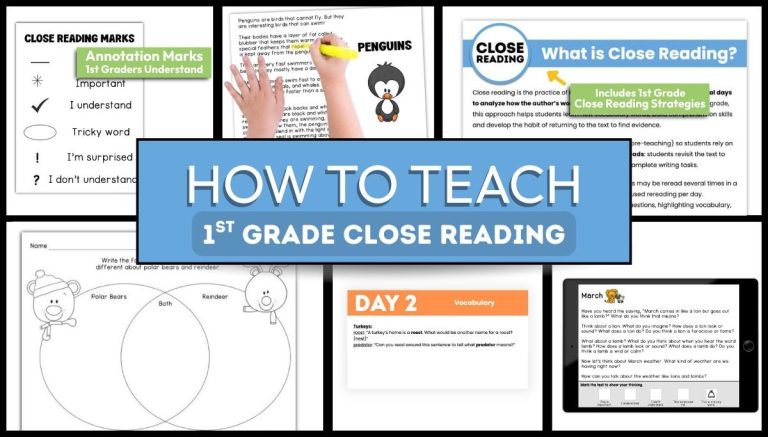
- Close reading marks and an annotation poster so students know how to make notes on the text
- A vocabulary response page where students define words, use them in context and draw a picture
- A retelling graphic organizer
- Teacher notes on what first grade close reading is, what you need to start and which tools to use
How a Week With One Passage Works
Each passage gets five days. Each day has a different job:
- They highlight unfamiliar or important words.
- They annotate key details with close reading marks.
- They answer comprehension questions by going back to the text.
- They retell and use new vocabulary in their own words.
Rereading the same passage all week builds fluency, too. By the end of the week, the text is familiar, so students can focus on reading it smoothly and with expression.
If you want to see a full week mapped out day by day, I walk through it in 1 Week of Close Reading Lesson Plans for First Grade.
Whole Group or Small Group?
Both work. If your whole class is new to close reading, start with whole group. Project the Google Slides version, model the close reading marks and think aloud as you annotate. Once students know the routine, move the passages to your small groups so you can listen to each child reread.
The Google Slides version also works for students who need to see the text bigger, or for a digital center where kids reread and practice on their own.
A Note on Reading Level
These passages are meant to be a level harder than what your students read on their own. That’s on purpose. Close reading is supported reading: you read together, reread, and dig into words and sentences. The challenge is what builds vocabulary and comprehension.
How to Fit It Into November
November has short weeks, so here’s one way to plan it:
- Week of Veterans Day: “Veterans Day” (nonfiction)
- Mid-November: “Turkeys” or “Cranberries” paired with “My Favorite Meal”
- Thanksgiving week: “The First Thanksgiving” or “Being Thankful”
Save the passages you don’t get to. “Families” and “Grandma’s Visit” work well any time of year.
Tip: Give Each Student a Close Reading Folder
Keep each student’s passage, vocabulary page and retelling organizer in one folder for the week. Kids pull it out every day, so nothing gets lost between Monday and Friday. At the end of the week, the collected work shows you exactly how each student worked through the text, which makes it easy to spot who needs more support.
Standards Covered
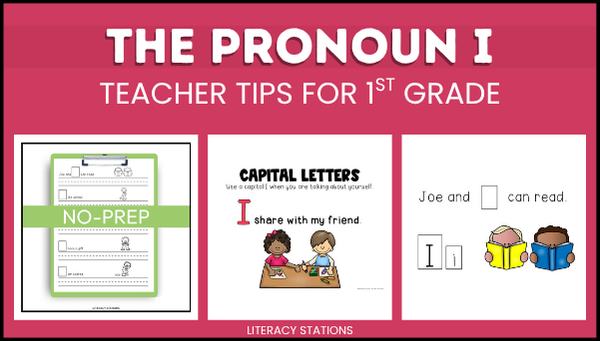
The November passages support RL.1.1, RL.1.2, RL.1.3, RI.1.1, RI.1.2, RI.1.4 and RF.1.4: asking and answering questions, retelling, describing characters and setting, finding the main topic, figuring out word meanings and reading with fluency.

Want Close Reading For Every Month?
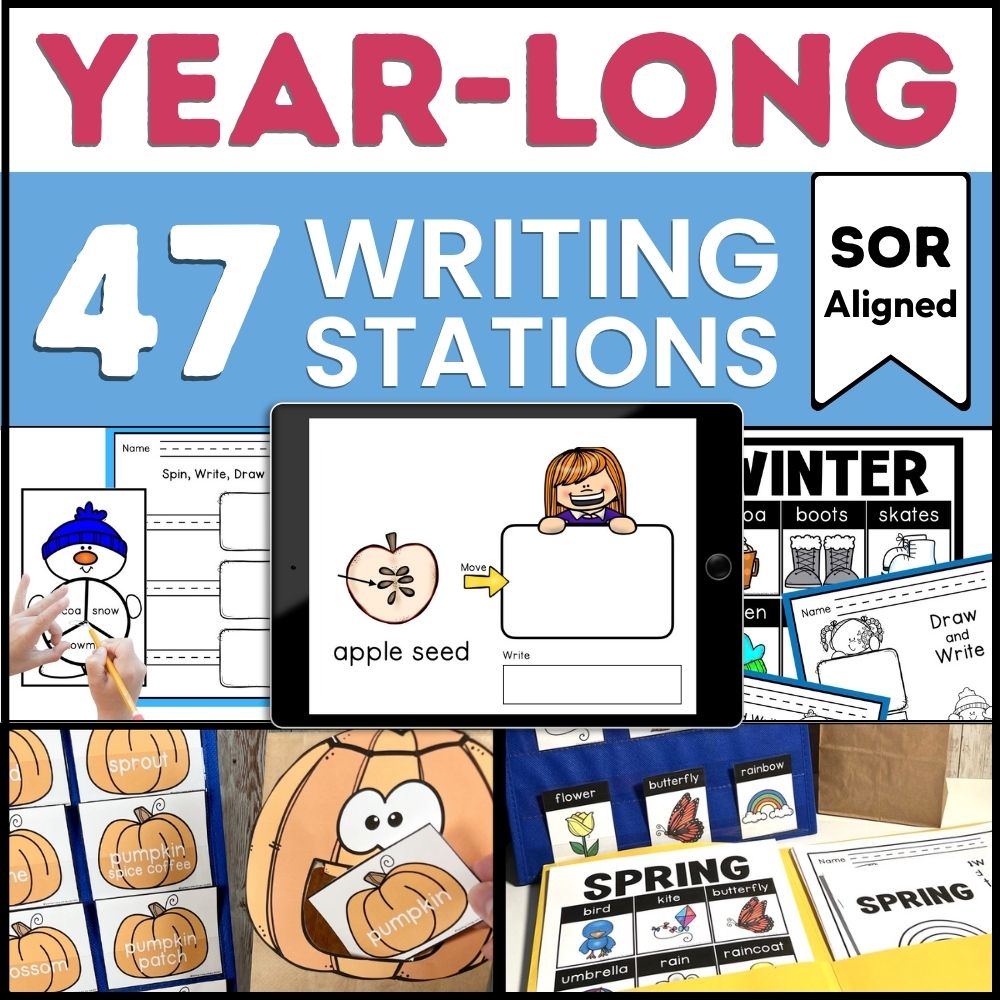
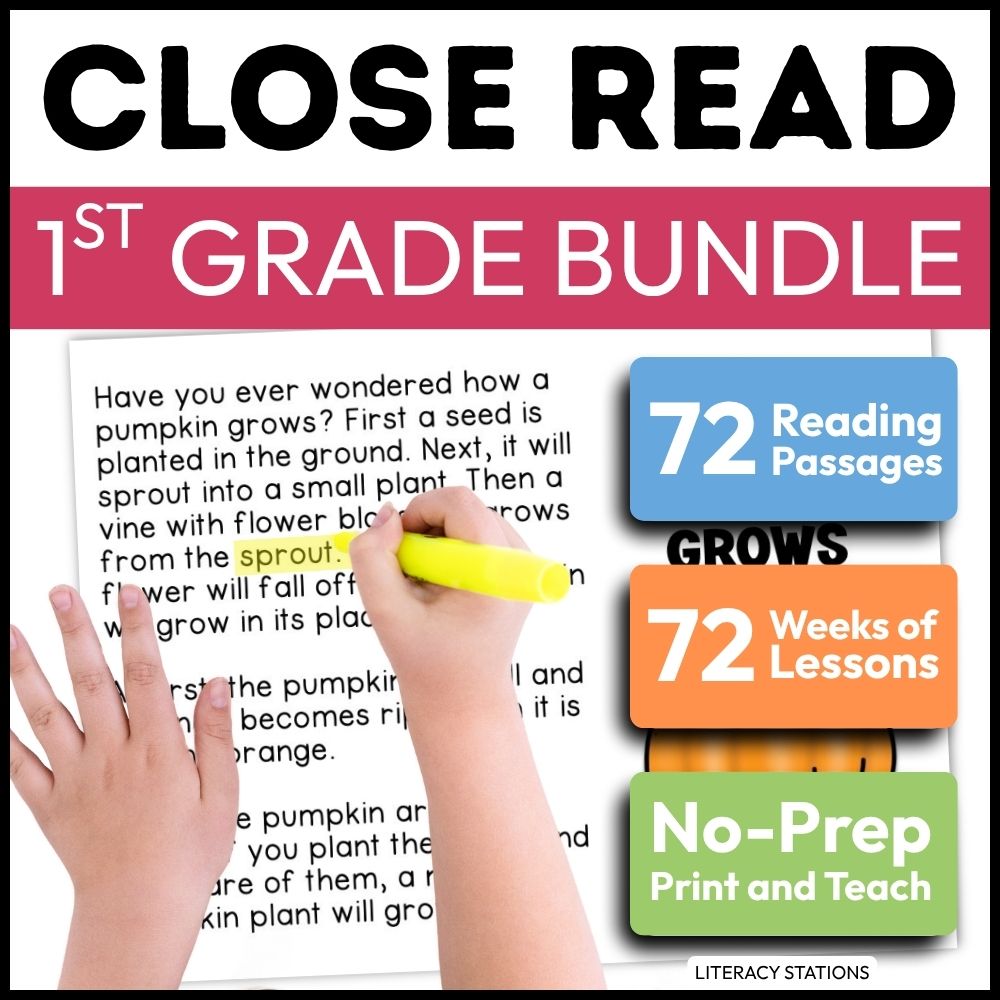
The November set is one of nine monthly sets in the Close Reading Passages Bundle, which has 72 passages (36 fiction and 36 nonfiction) from September through May. On TPT, one teacher wrote about the bundle: “My students are enjoying these passages.” (Teachloveinspireprimary)
November close reading, planned
8 fiction and nonfiction passages, a 5-day lesson plan for each, plus annotation tools, in print and Google Slides.