
Ask a first grader to describe a character and you’ll usually hear “She’s happy” or “He has brown hair.” Both are true. Neither is a character trait. Teaching character traits in first grade starts with helping students see the difference between how a character feels, how a character looks, and what a character is like.
Literacy Stations new Character Traits Anchor Charts and Task Cards help your students tell the difference.
Start With a Sort: Feels, Looks or Trait?
Students confuse character traits with how a character looks or feels. So before you teach your students about the different character traits, do a sorting exercise to help them tell the difference between the look of a character, how they feel, or what character trait they’re showing.
Post the three labels, Feels, Looks and Trait, and read describing words aloud one at a time. Students decide where each word goes:
- happy, scared, excited → Feels
- brown hair, blue eyes, white shoes → Looks
- kind, brave, patient → Trait
Character feelings can change throughout the story but a character trait is how the character acts again and again. Once students hear that difference, the rest of the lesson gets much easier.
Post the Anchor Chart
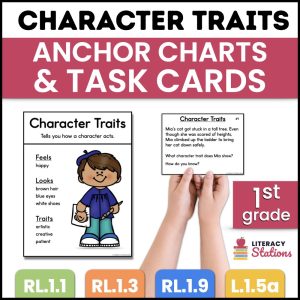
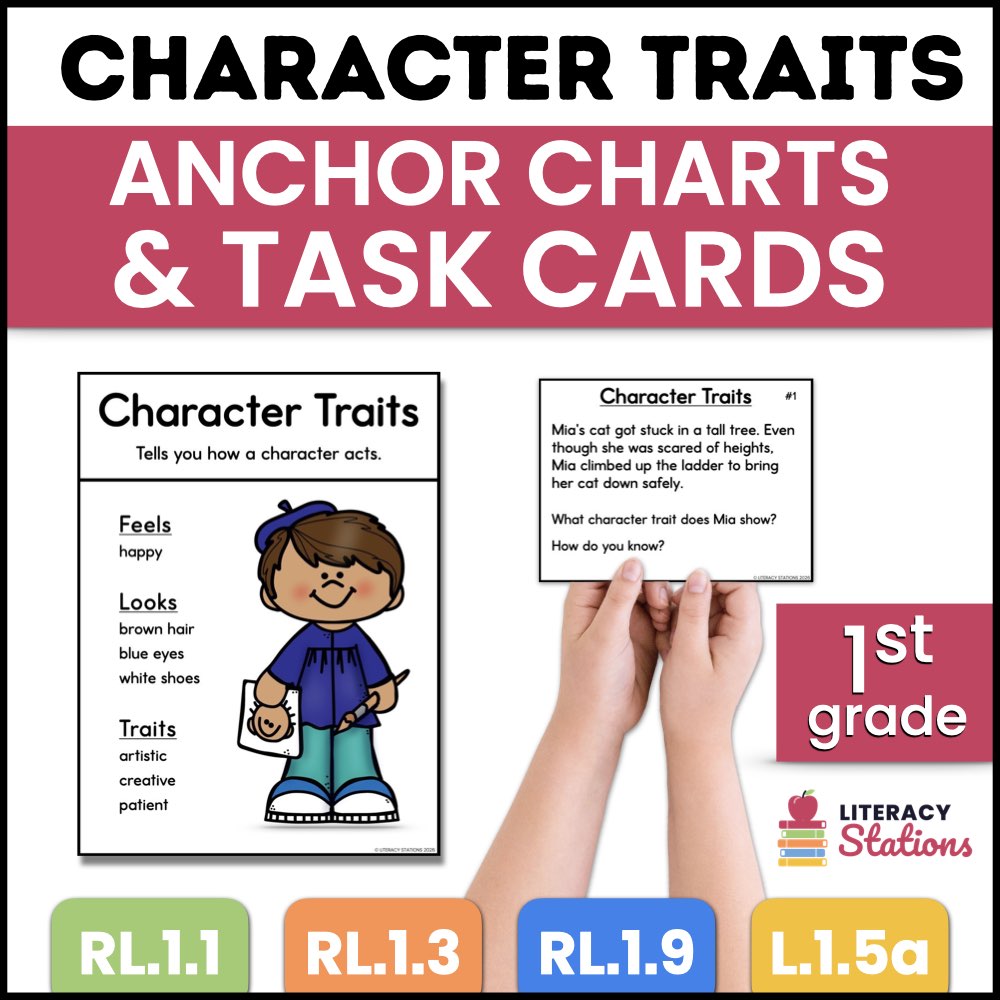
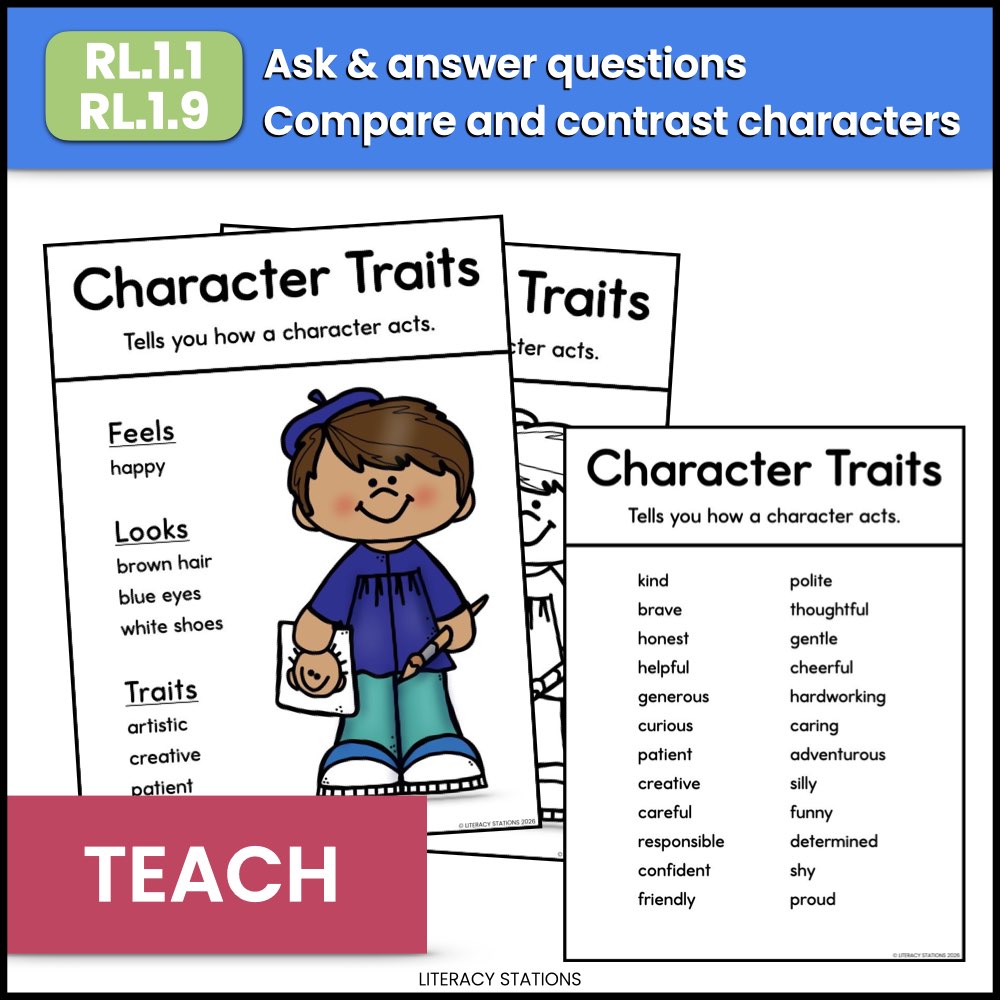
The first character traits anchor chart shows one character with three lists: what he feels (happy), how he looks (brown hair, blue eyes, white shoes) and his traits (artistic, creative, patient). It comes in color and in black and white.
Next to it, post the second anchor chart with the word list. It has 24 character traits students can choose from: kind, brave, honest, helpful, generous, curious, patient, creative, careful, responsible, confident, friendly and more.
Teach the Sentence Frame: “I know ___ is ___ because ___.”
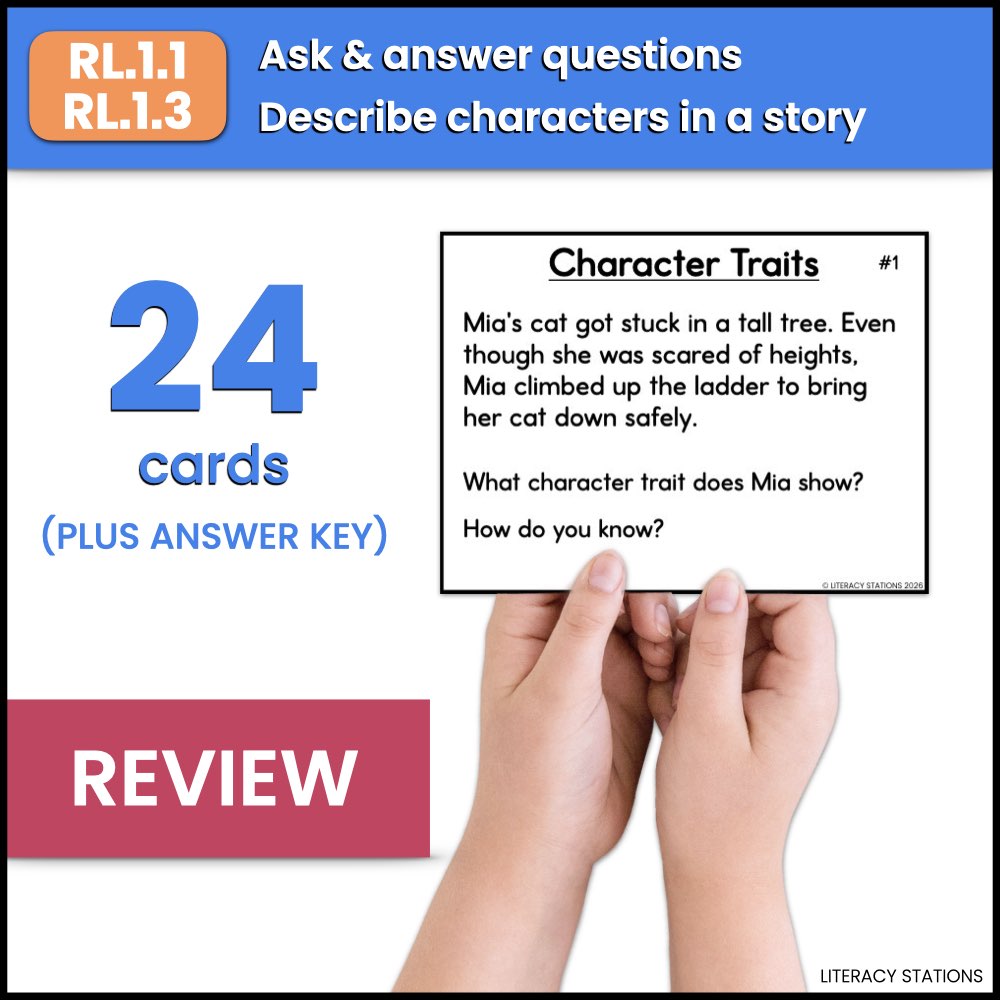
This sentence starter will help your first graders discuss character traits they notice. Every task card asks two questions:
- What character trait does the character show?
- How do you know?
Here’s a sample card:
Mia’s cat got stuck in a tall tree. Even though she was scared of heights, Mia climbed up the ladder to bring her cat down safely.
Model it out loud: “I know Mia is brave because she climbed the ladder even though she was scared of heights.” Notice that Mia feels scared, but she is brave. That one card reviews the whole sort.
Introduce, Practice, Review
The task cards work three ways:
- Introduce: read one card together and talk about how you figured out the trait, using the sentence frame.
- Practice: students choose a partner, read a card and talk it over. The cards work at a reading center too.
- Review: use one card at a time as a two-minute review. It’s an easy warm-up before a read-aloud.
Not Every Trait Is a Nice One
The first cards show traits like brave, kind, helpful, curious and patient. The later cards show more negative character traits. For example:
Even after his mom asked three times, Jackson still refused to wear his coat outside.
Jackson is stubborn. Other cards show bossy, selfish, grumpy, careless, jealous and impatient. Real story characters have both kinds of traits, and the wolf, the giant and the stepsisters all need describing too.
To compare characters (RL.1.9), pull two cards with opposite traits and ask, “How are these two characters different?”
Make It Easier, or Harder
Some traits, like determined or confident, are hard for first graders to come up with on their own. Give students two or three traits to choose from: “Is Ben determined, or bossy?” It’s helpful to use harder character traits as multiple choice options while your first graders are still practicing this skill.
For a reading center, put out the answer cards too. Each task card has a matching card with the answer printed on it, so students can check their own work. There’s also a one-page answer key for you.
What’s in the Set
- Feels / Looks / Trait sorting labels
- Character traits anchor chart, in color and black and white
- Character traits word list anchor chart (24 traits)
- 24 character traits task cards
- 24 answer cards and an answer key
- Quick tips for introducing, practicing and reviewing
It covers RL.1.1, RL.1.3, RL.1.9, L.1.5a and SL.1.1.
Keep Practicing All Year
Character traits come up in every story you read. Pair the task cards with:
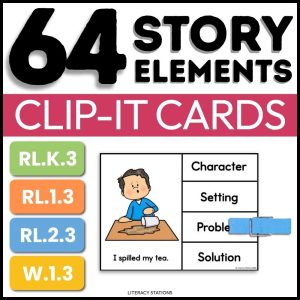
- Story Elements Reading Center Cards, for characters, settings, problems and solutions
- The free reading comprehension bookmarks, which include character traits, so students can keep the skill in their book bins
Traits, not feelings
Sorting labels, anchor charts and 24 task cards with answer cards for 1st grade.