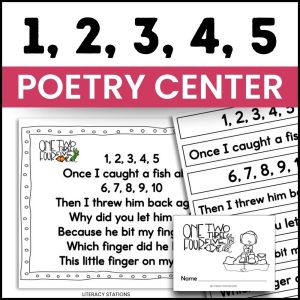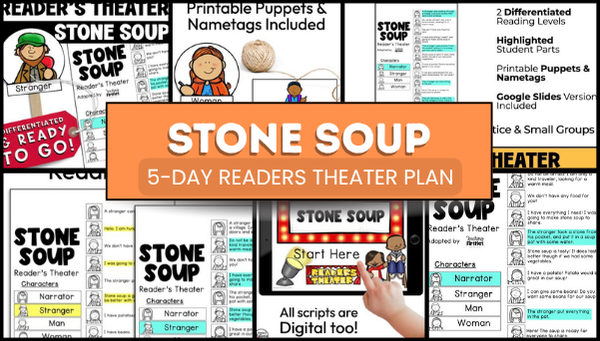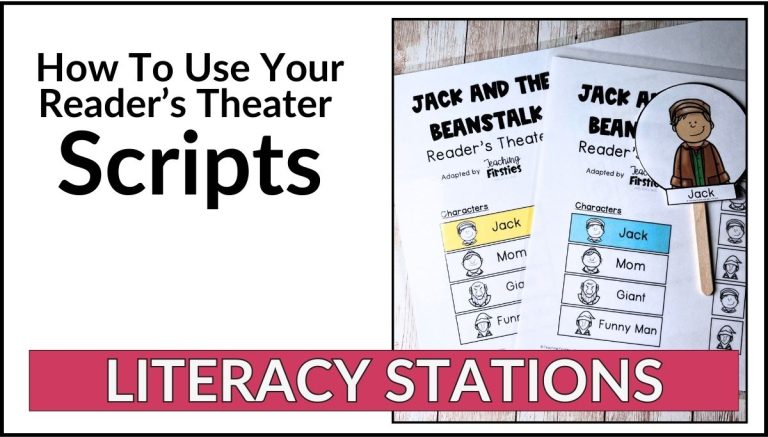
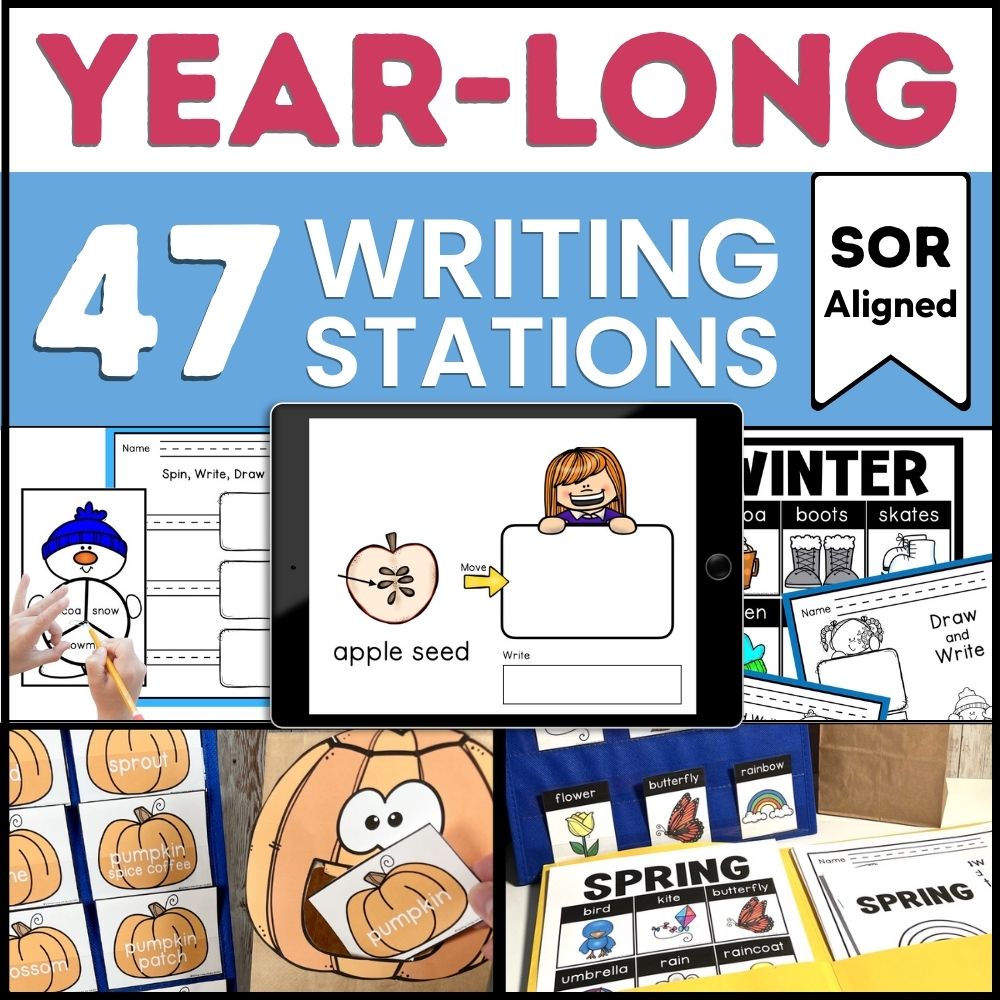



A well-organized poetry center gives students repeated reading fluency practice. Because first grade poems often include rhyme, repetition, and familiar language patterns, students can reread them with confidence, helping them move from decoding individual words to reading smoothly and with understanding. Here’s some tips on how to set up a poetry center in your first grade classroom so students can practice reading with fluency and expression.
Choose Familiar Poems First
Start with poems students already know, like nursery rhymes or seasonal favorites. Familiarity helps them focus on fluency and expression instead of decoding. Because they already recognize the rhythm and structure, students can focus on phrasing, pacing, and voice instead of just decoding words.
Familiar poems also make it easier to model fluent reading, students can listen to your expression and then echo it back, turning a first grade poetry center into reading fluency practice.

Use Consistent Poetry Center Routines
Keep the structure the same every week (for example: read, build, write, illustrate). When students know what to expect, you spend less time explaining directions and more time building fluency.
A consistent routine also helps first graders develop independence. They learn how to move from reading the poem to completing tasks like sequencing or illustrating key phrases. Over time, the predictability allows students to focus on reading with accuracy and expression rather than remembering what to do next.
Store Materials by Poem
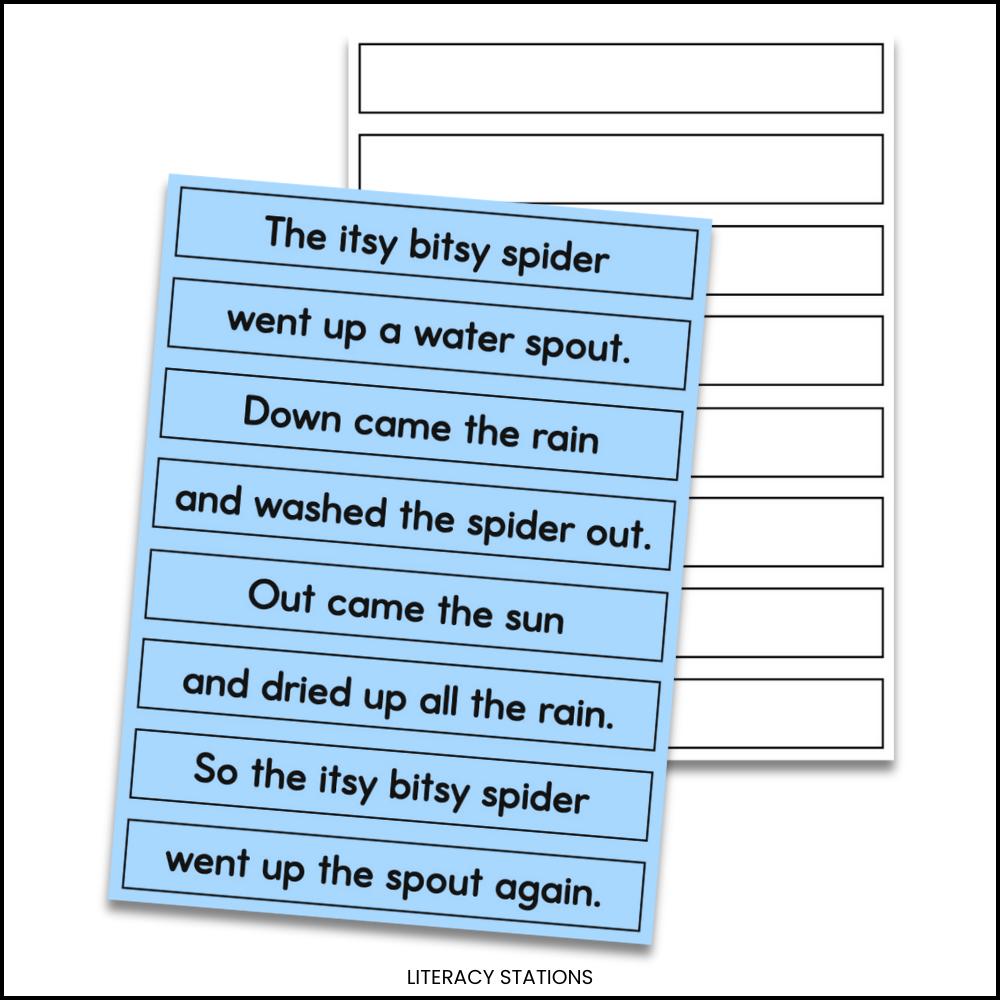
Staying organized is helpful when you’re learning how to set up a poetry center. Keep poetry activities like mini books, sequencing strips, and worksheets in its own labeled folder or bin. Storing materials this way also keeps your center predictable. Students know exactly where to find what they need, which reduces downtime and keeps transitions smooth.
If you use seasonal poems, color-code folders by month or theme so you can quickly swap materials in and out without re-prepping the entire center. Over time, this organization makes it easier to manage your rotation system and helps students with cleanup after center time.
Model the Poetry Activities Whole Group
Before adding a new poem to the center, model each activity as a class. Students are more independent when they’ve seen the steps first. Whole-group modeling gives you the chance to demonstrate reading fluently, show how to use materials, and set clear expectations for how the center works.
When students later visit the poetry center, they can focus on reading and fluency instead of trying to remember directions.

Display the Poem in Multiple Formats
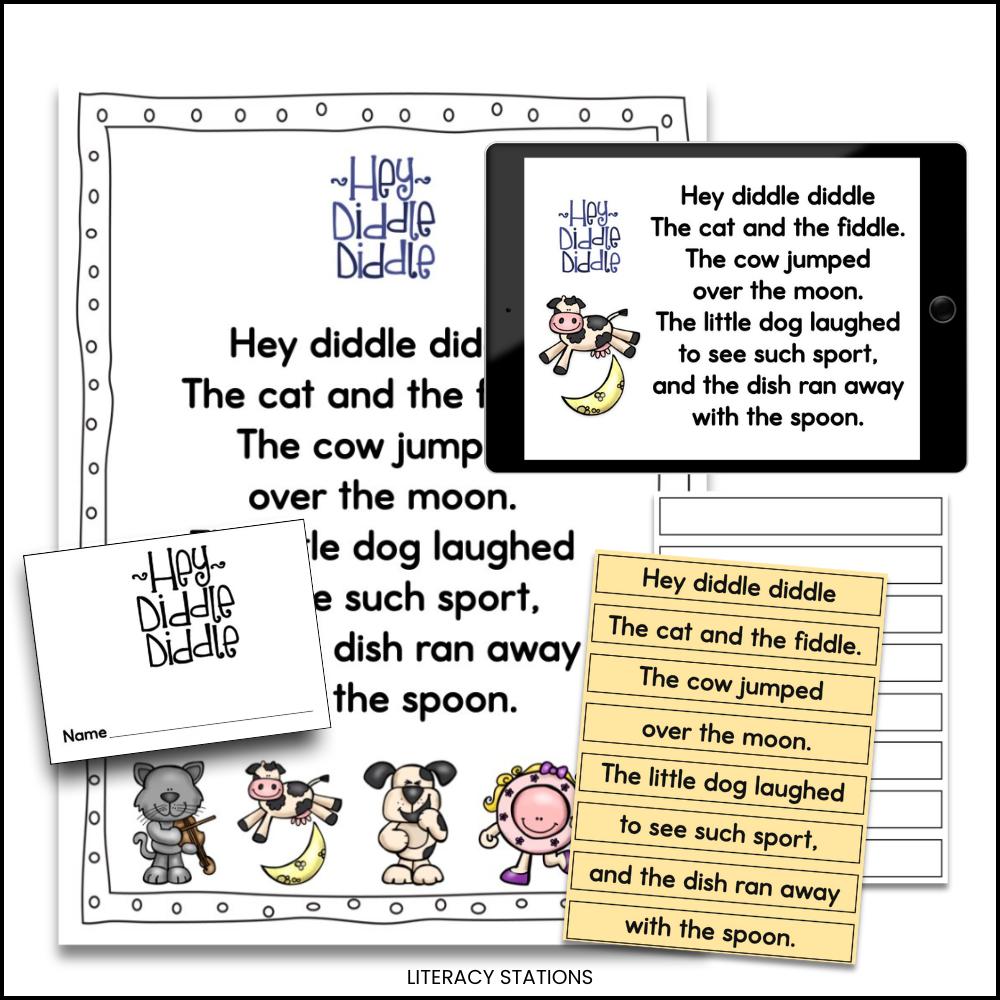
Having the poem in more than one format supports all learners. Consider displaying the poem with:
- Sentence strips in a pocket chart
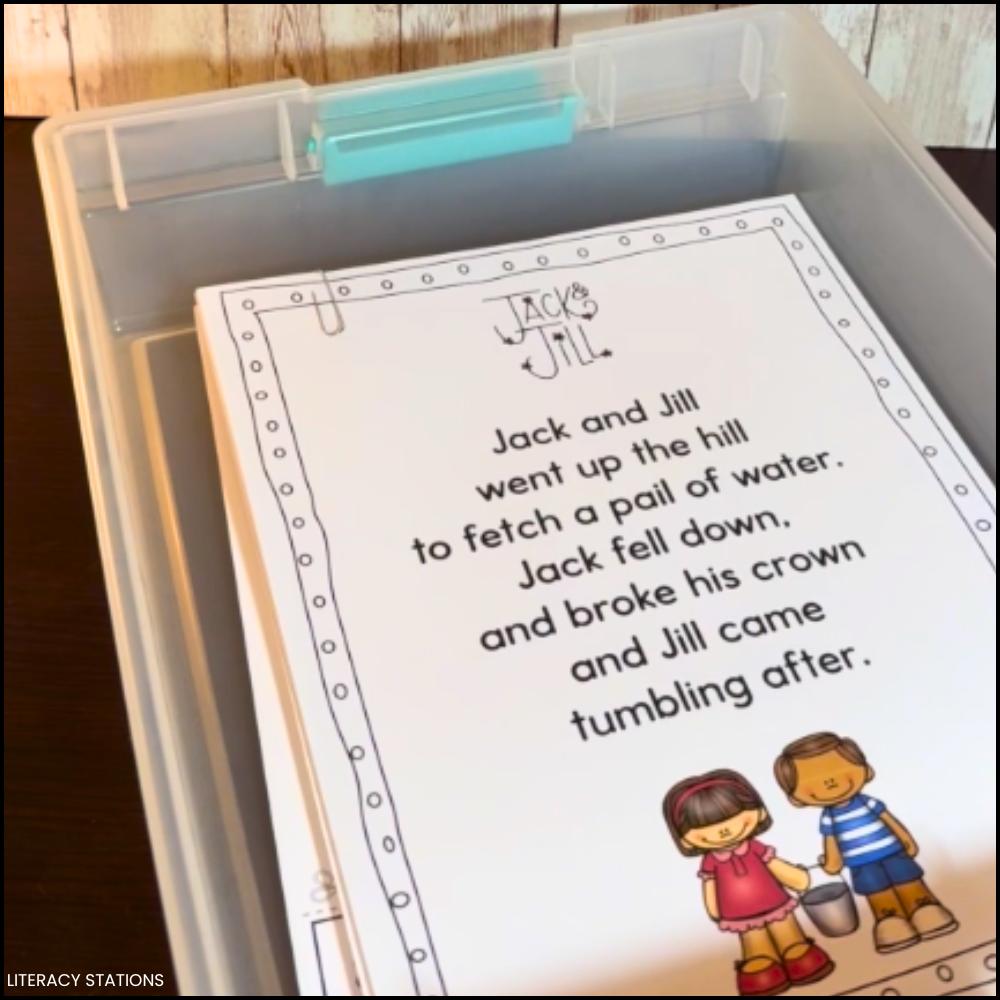
- Poems in page protectors in a binder
- Minibooks for individual or take home rereading
- Digital copies for listening practice
This flexibility allows students to move from whole-group modeling to independent reading fluency practice.
Incorporate Audio or Video
If your poetry centers include digital options like poetry read-alouds, this helps students can hear how fluent reading sounds. Listening to modeled expression, rhythm, and pacing helps students internalize how poetry should flow.
This covers the ELA standard RF.1.4b – Read grade-level text orally with accuracy, appropriate rate, and expression on successive readings. At a poetry center, students practice reading with accuracy, phrasing, and expression using modeled reading from the poem’s video.
Our Poetry Centers include 25 familiar nursery rhymes set to music, giving students the chance to sing along, hear fluent phrasing, and connect rhythm with meaning as they read.

Rotate One New Poem at a Time
Avoid changing the entire center every week. Instead, keep one familiar poem for review and introduce just one new poem at a time. This gradual rotation helps students reread fluently because they already know the poems and center expectations. Familiar text allows them to focus on phrasing, expression, and rhythm instead of decoding.
Each of the 25 poems in our Poetry Centers includes the same types of activities so you can easily switch out the poem copies without reteaching directions. This consistency keeps your poetry center simple to manage and predictable for students, especially if you’re learning how to set up a poetry center for the first time.
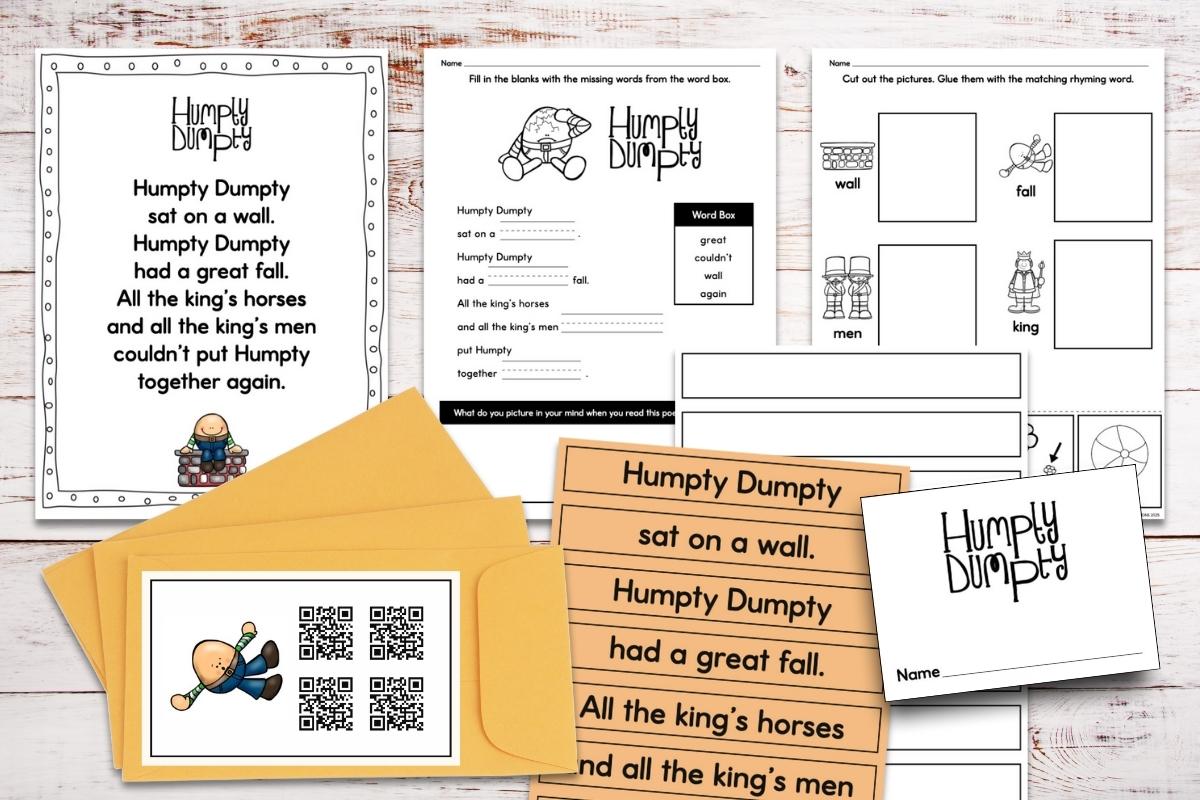
When poetry centers are structured and consistent, they give first graders the reading fluency practice. The rhyme, rhythm, and repetition in familiar text naturally supports reading fluency, helping students move from sounding out words to reading smoothly and with expression.
The Poetry Centers on LiteracyStations.com include 25 familiar nursery rhymes with activities that support reading standards and fluency goals. Each poem comes with sequencing strips, mini books, rhyming practice, and retelling pages that make setup simple and instruction meaningful.