


It’s late October. Your first graders know a sentence starts with a capital letter. And still, there it is in their journals: “i saw a dog.”
Teaching first graders to capitalize the pronoun I takes more than one lesson. Here’s why the lowercase i hangs on, and a simple tip to fix it.
Why the Lowercase i Hangs On
There are a few reasons this one is so stubborn:
- It’s a one-letter word. Kids write it fast, and fast writing means lowercase.
- It breaks the pattern. Most words only get a capital at the start of a sentence. “I” gets one everywhere, even in the middle.
- They see it, but they don’t notice it. Students read “I” all day long without thinking about why it’s capitalized.
So the fix is to make the rule visible, give kids a lot of quick practice, and check it every time they write.
Step 1: Teach It as Its Own Rule
Don’t fold “I” into a general capital-letters lesson. Teach it on its own day with its own anchor chart. Keep the rule short enough to chant:
“When I talk about me, I use a big I.”
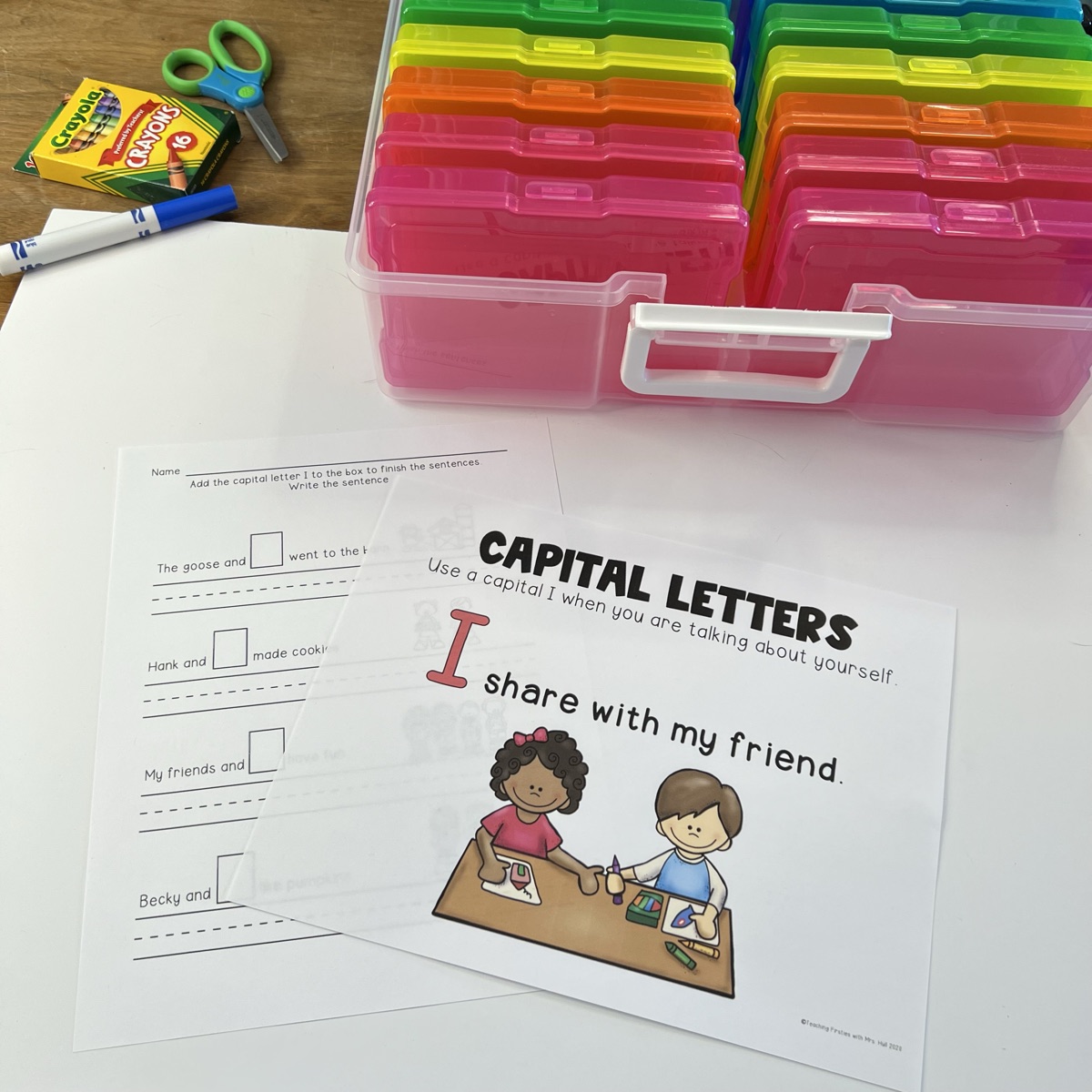
Post the anchor chart where kids write, not just on the grammar wall. The Capitalization of the Pronoun I resource includes a printable anchor chart made for this.
Step 2: Fix One Sentence a Day
Each morning, write one sentence on the board with a lowercase i in the middle. For example: “On Saturday i played soccer.” Students find the mistake and fix it.
Then flip it: have a student say a sentence about themselves and write it on the board together. Each time you get to “I,” stop and ask, “Big I or little i?”
This takes about two minutes.
Step 3: Add Independent Practice They Can Do Alone
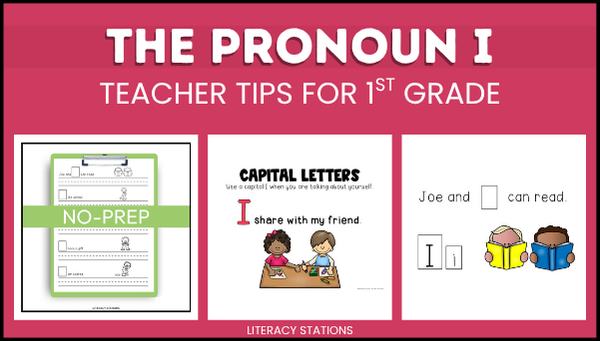
Once you’ve modeled it, students need lots of quick reps. The Pronoun I resource includes 18 Google Slides with drag-and-drop capital letters and audio directions, so kids can practice on their own while you work with a small group.
Two printable practice pages work well for:
- A quick check after the lesson
- Spiral review a few weeks later
- Homework or early finisher work

Quick Ways to Get More “I” Sentences
The more often kids write “I,” the more chances they have to get it right. A few easy ways to build it into the day:
- Sentence starters. Use “I can…”, “I like…” and “I see…” in morning work or journal prompts. Every sentence starts with the capital I.
- “I” in the middle. Once they’ve got the start of a sentence, move “I” to the middle: “On Monday, I…” or “My dog and I…”
- Partner check. Partners swap journals and look for one thing only: every “I” is a big I.
- Find it in books. During read-aloud, ask students to give a thumbs-up when they see the word “I” on the page.
Step 4: Check It Every Time They Write
This is the step that makes the rule stick. Add “Did I use a big I?” to your editing checklist, or have students circle every “I” in their writing before they turn it in.
When kids check their own writing for one rule, they start to notice it while they write. That’s the goal.
When the Pronoun I Is Fixed, What’s Next?
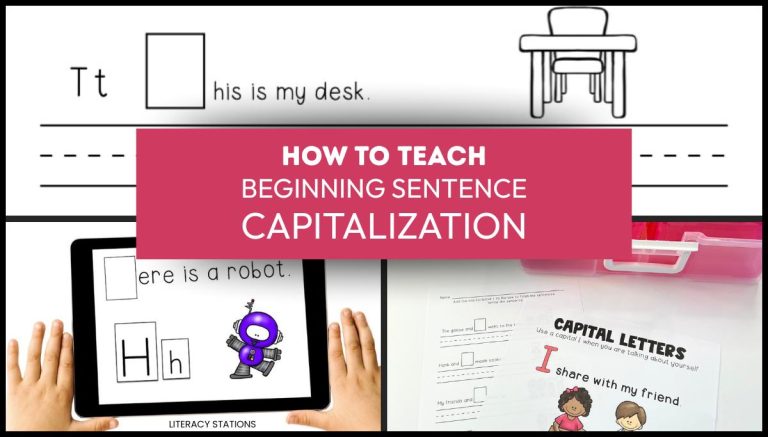
If your class is still mixing up capitals at the start of sentences, start there first. I walk through that lesson in How to Teach Beginning Sentence Capitalization. Teaching Firsties also has more ideas in its post on teaching capitalization.
After the beginning capitalization move onto names, places, days of the week, months and holidays. The Capitalization Rules Bundle covers all seven rules with the same format: an anchor chart, Google Slides with audio directions (109 slides in all) and printable practice pages. Students learn the routine once and use it for every rule.
Fix the lowercase i this month
An anchor chart, 18 Google Slides with audio directions, and two printable practice pages, ready for tomorrow’s mini-lesson.