

Stone Soup is a perfect November story about sharing. It’s also great for your students to study with a fun cast of characters and repeating dialogue. That makes it a natural fit for readers theater. Here’s how I’d plan Stone Soup readers theater in five days, from the first read-aloud to a Friday performance.
If you’re looking for Stone Soup crafts, writing ideas and read-alouds, Teaching Firsties has a whole post of Stone Soup activities.
Before You Start: Print Once, Use Every Year
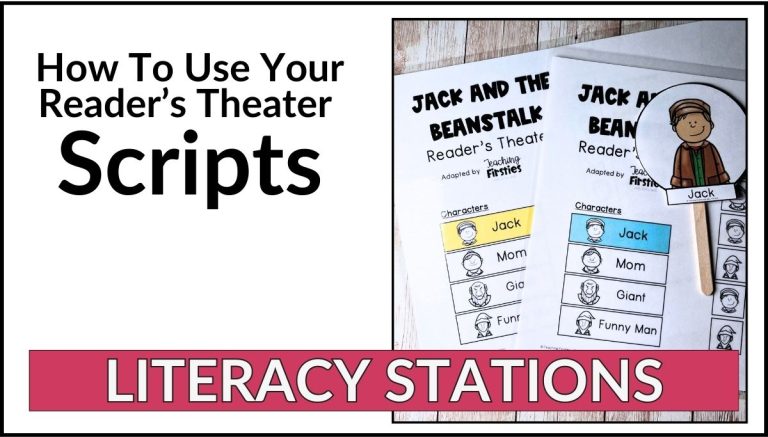
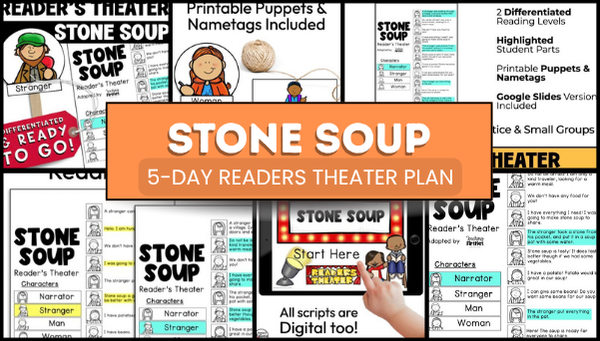
The Stone Soup Readers Theater Scripts come with two leveled versions of the script, one for emerging readers and one for more fluent readers. Each of the four roles’ lines are already highlighted, so students don’t have to hunt for their part.
Print a script for each student in a group, plus the name tags and puppets. Laminate the puppets and you’ll have them for next November, too.

Day 1: Read the Story and Meet the Characters
Start with a read-aloud of any Stone Soup picture book you have. Talk about who’s in the story and what each character wants. Then ask the big questions: why did the soup turn out so good? How did the traveler trick the villagers?
Save the readers theater scripts for Day 2. You want kids to know the story well before they read it out loud. Familiar text lets them focus on expression instead of decoding.
Day 2: Echo Read the Script Together
Project the Google Slides version of the script for the whole class. Read a line with expression, then have your class echo it back.
This is where you model fluency out loud:
- Pause at the end of a sentence.
- Make your voice match the character.
- Read the repeated lines a little louder so kids hear the pattern.
By the end of Day 2, every student has heard and read every line once, before anyone has a part.

Day 3: Assign Leveled Roles
Now hand out parts. Give the emerging-reader version to students who need shorter, simpler lines and the fluent version to students who are ready for more. Everyone performs the same story, so nobody feels left out.
Hand out name tags and puppets as you assign roles. This motivates your students to take ownership of their part.
If you want help deciding who gets which role, Teaching Firsties has a post on assigning readers theater roles.

Day 4: Rehearse in Small Groups
Day 4 is all practice. It will take awhile for your students to get the hang of following along with a readers theater script. Groups read the script two or three times. While they practice, you rotate and coach speed, phrasing or expression.
Here’s a quick routine for fluency:
- First read: Read your highlighted lines with your finger under the words.
- Second read: Read it again and make your voice sound like your character.
- Third read: Read it like you’re on stage.
Groups that finish early can practice with the Google Slides version at a center.

Day 5: Perform and Reflect
Friday is show day. Each group performs for the class (or for a buddy class, if you can arrange it). Keep the audience’s job simple: listen, clap, and tell the readers one thing they did well.
After the show, ask students to think back on how their reading changed from Monday to Friday. Did they read faster? Did they sound more like their character?

Keep the Readers Theater Going
Once your class knows this five-day routine, you can repeat it with any script. The steps stay the same; just change out the story. That’s what makes readers theater easy to run all year.
For more on getting the most from your scripts, read Getting the Most Out of Your Readers Theater Scripts. Teaching Firsties also has a full series, starting with readers theater in the classroom.
Ready for Stone Soup week?
Two leveled scripts, pre-highlighted lines, puppets, name tags and a Google Slides version: everything for this five-day plan.